
What Myofascial Massage Actually Does to Your Body
Most people walk in thinking myofascial massage is just a deeper version of a regular massage. It's not. And once you understand what's actually happening under your skin, it makes a lot more sense why you feel so different after a session.
Your body has a web of connective tissue called fascia. It wraps around every muscle, bone, and joint you've got. Think of it like a thin film that holds everything in place. When fascia gets tight or stuck, it pulls on the structures around it. That pulling creates pain, stiffness, and limited range of motion in spots that sometimes seem totally unrelated to where the real problem is.
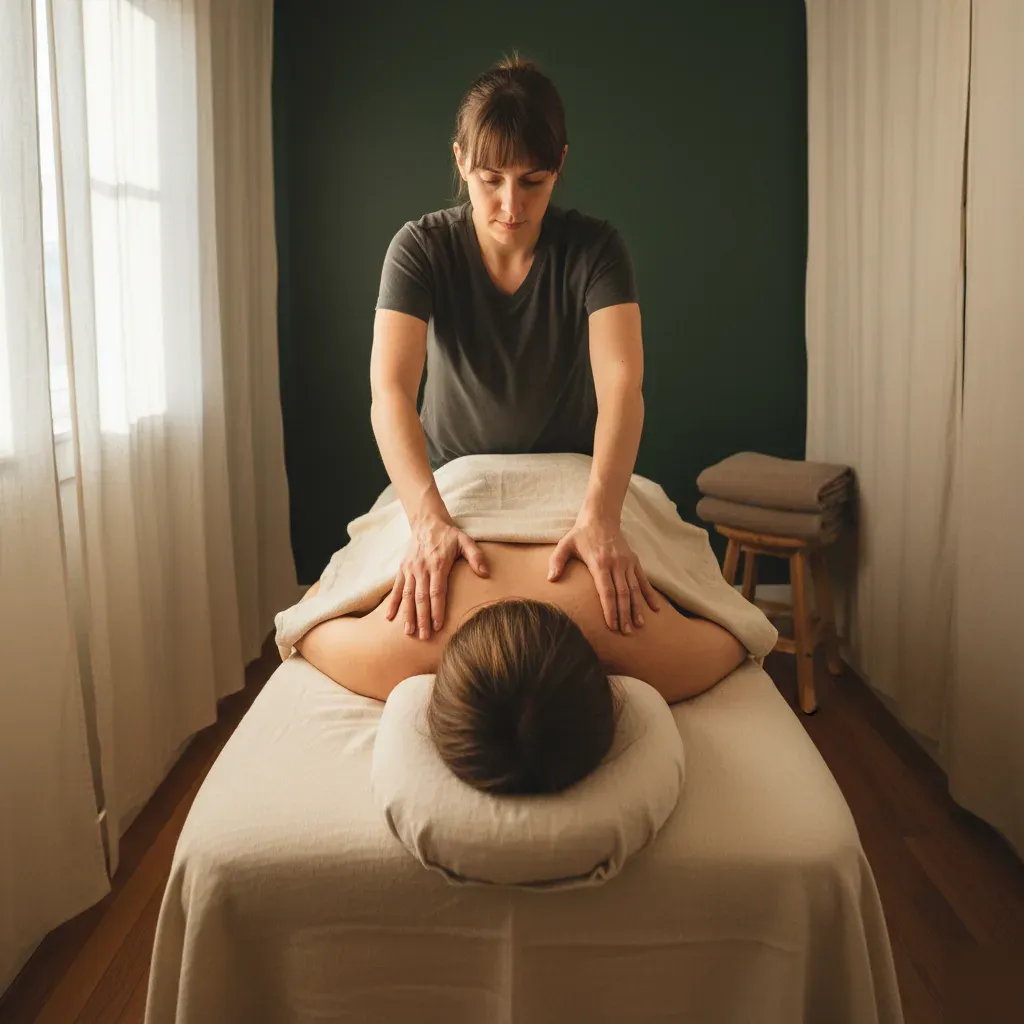
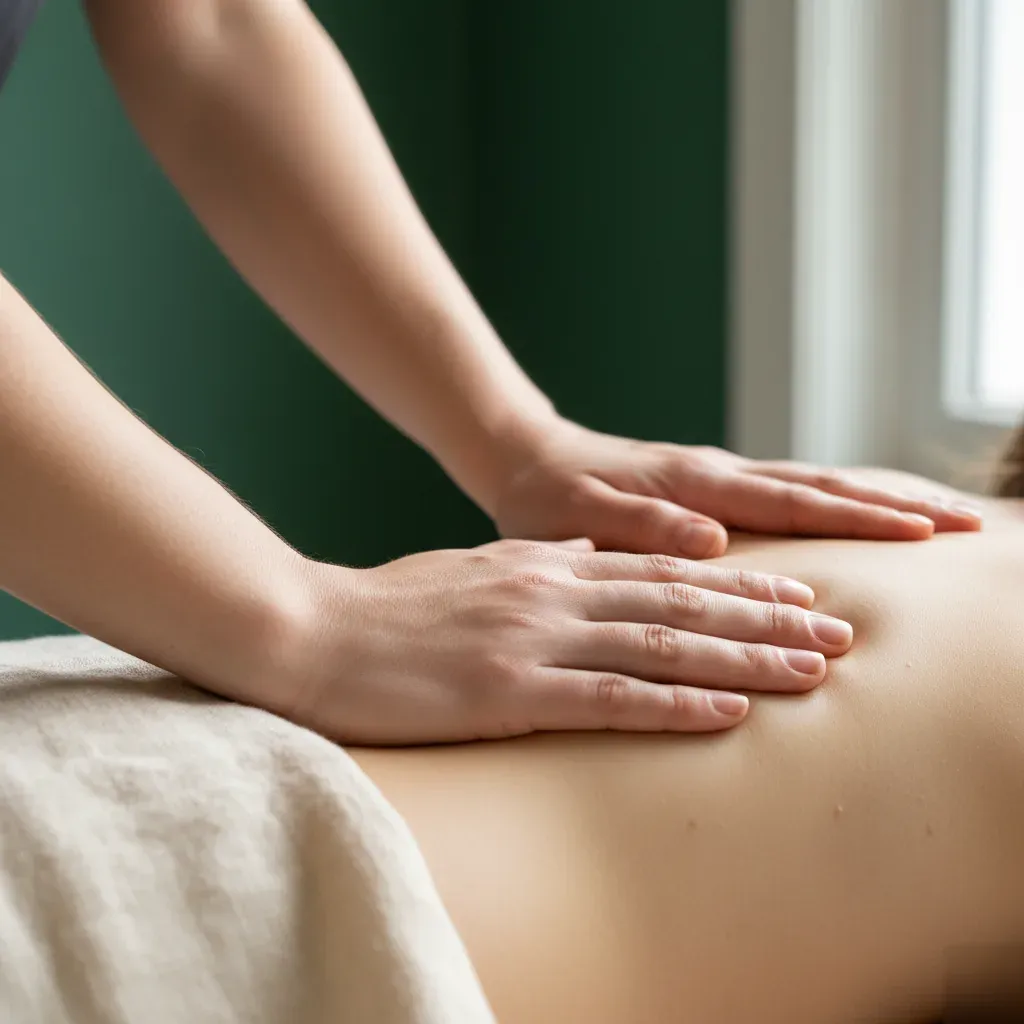
So what does myofascial massage actually do? Our team uses slow, sustained pressure to stretch and release those fascial restrictions. Here's what's happening during a session:
- Sustained pressure softens fascial adhesions that form from stress, repetitive movement, or sitting too long
- Blood flow increases to areas that have been restricted, which may help relieve soreness
- Your nervous system shifts into a more relaxed state, reducing overall tension
- Range of motion often improves because the fascia stops pulling muscles out of alignment
It's common for someone to come in with a stiff neck, and the restriction is actually in their upper back or shoulder. The pain shows up in one place, the source lives somewhere else entirely. That's fascia doing its thing.
According to the National Center for Complementary and Integrative Health, massage-based approaches like this may help support relief from musculoskeletal discomfort. But most of our clients don't need a study to tell them it's working. They feel it the moment they stand up.
This isn't a relaxation-only experience. It's bodywork with a purpose. Clients near Windsong Ranch who spend hours at a desk, athletes pushing hard on the weekends, parents carrying kids on one hip all day. The fascia remembers all of it. And it holds on until something releases it.
Myofascial Massage vs. Deep Tissue: Knowing Which One You Need
This is a common question. Someone calls our Prosper location and says they want deep tissue work. But when we ask what's going on, they describe something that sounds a lot more like a fascia problem than a muscle knot.
Here's the simple version. Deep Tissue Massage goes after the muscle itself. It uses firm, steady pressure to work into deep layers of muscle tissue. Great for soreness after a hard workout or chronic tension in one spot. Myofascial Massage is different. It targets the fascia, that thin web of connective tissue wrapped around every muscle in your body. When fascia gets tight or stuck, it pulls on everything around it. So your shoulder might hurt, but the real problem started in your upper back.
Not sure which one fits? These signs usually point toward myofascial work:
- Tightness that stretching doesn't seem to help
- Pain that moves around or shows up in unexpected spots
- A feeling of restriction when you turn your head or reach overhead
- Stiffness that gets worse after sitting at a desk all day
And here's what we see with clients who actually need Deep Tissue Massage. They can usually point to exactly where it hurts. One specific muscle. One stubborn knot. The pain stays put.
Sometimes a client comes in saying "my neck has been killing me for months," and it turns out the fascia running from their jaw down through their shoulder is locked up. Deep pressure alone won't release that. The technique matters.
Our team talks through all of this before we ever start a session. We want to make sure you're getting the right service, not just the one you happened to book online. Sometimes that means a Swedish Massage for surface-level stress, or pairing recovery with Compression Therapy. We'd rather get it right than rush through something that won't actually help you feel better.
What to Expect During Your Session at Our Prosper Location
You walk in. We talk first. That part matters more than most people realize.
Before anyone touches your fascia, our team wants to know what's going on with your body right now. Where does it feel stuck? What movements give you trouble? We ask because myofascial massage isn't a one-size approach, it's hands-on work that follows the restrictions your body is actually holding. So that conversation at the start shapes the entire session. Clients coming in from across Prosper tell us the same thing: nobody's ever asked them that many questions before a massage.
Once we've got a clear picture, here's how the session flows:
- You settle into a private suite where the lighting is low and the space is quiet.
- Your therapist begins with broad, slow pressure to locate the fascial restrictions causing your discomfort.
- Sustained holds are applied to each restriction, usually lasting 90 to 120 seconds per area, until the tissue releases.
- We check in with you throughout. Too much pressure? Not enough? We adjust on the spot.
- After the hands-on work, we combine your session with Red Light Therapy to support cell rejuvenation while you rest.
People are often surprised by how different this feels from a regular massage. There's no rushing. No loud music. No pressure to add on services you didn't ask for, and no VIP tiers. Every client who walks through our door at 1630 W Prosper Trail is treated that way. That's not a tier you pay extra for. It's just how we operate.
You're in good hands from the moment you arrive until you walk back out feeling looser than you have in weeks.

Conditions That Respond Well to Myofascial Release
You wake up and your neck won't turn all the way. Or maybe your shoulder has been tight for months, not painful enough for a doctor visit but annoying enough to mess with your sleep. That's the kind of thing myofascial massage was built for.
We see clients in Prosper walk in with a wide range of concerns. Often the root issue is the same. Fascia that's stuck, restricted, or pulling on something it shouldn't be. Here are the most common conditions that may respond well to myofascial release:
- Chronic neck and shoulder tightness from desk work or long commutes
- Lower back stiffness that lingers after exercise or yard work
- Tension headaches that start at the base of the skull
- Limited range of motion in the hips or shoulders
- Jaw tightness and discomfort from clenching or grinding
According to the National Institutes of Health, myofascial restrictions can refer discomfort to areas far from the actual problem spot. So that ache between your shoulder blades? It might actually start in your chest fascia. That's why our team doesn't just chase the sore spot. We follow the fascial lines to find where the restriction really lives.
A lot of clients come in thinking they need a Deep Tissue Massage. And sometimes they do. But when the issue keeps coming back week after week, it's usually fascial. Deep pressure alone won't release fascia the way slow, sustained myofascial work can.
Here's something worth knowing. Myofascial massage isn't only for people in pain. Runners, weekend athletes, even folks who sit at a desk all day benefit from keeping their fascia mobile. Think of it like this: your muscles can be strong and still feel locked up if the tissue around them won't move freely.
Not sure if this is what you need? That's actually pretty common. Our skilled nurses and massage team can help you figure out the right approach during your visit. You can also explore everything we offer at our Wellness Center.
How Many Sessions You Typically Need and How to Get the Most From Each One
This is the question we hear more than any other. And the honest answer? It depends on what's going on in your body.
Some clients walk out after one myofascial massage session and feel a real shift. The tightness they've been carrying around for months finally lets up. But that doesn't mean one session solved everything. Fascia restrictions build up over time, they don't usually unwind in a single visit. Most people we work with in Prosper start noticing steady change after three to four sessions spaced about a week apart.
What a Typical Plan Looks Like
There's no rigid formula here. Our team looks at how your body responds and adjusts from there. But a general starting point usually follows this pattern:
- Your first session focuses on finding the areas where fascia is most restricted and starting to release them slowly.
- Sessions two and three build on that progress, going a bit deeper each time as your tissue responds.
- By session four, we're usually seeing real improvement in range of motion and less day-to-day stiffness.
- After that initial stretch, many clients shift to every two or three weeks for maintenance.
We see this pattern play out over and over with folks coming in from around Prosper. The ones who stick with it feel the difference.
Getting More From Every Session
What you do between appointments matters just as much as the session itself. Stay hydrated. Seriously, water makes a big difference in how pliable your fascia stays after we work on it. Move your body gently the day after, a short walk is plenty. And don't wait until you're locked up again to book your next visit.
The people who get the best results are the ones who come in consistently rather than waiting until things get bad again. Your body responds to the rhythm.
The Work Is Led by a Nurse, Not Just Booked Online
This is run by Oge Ogundu, DNP, MSN, RN, and her nursing background is the reason the whole place operates the way it does. Every session is physician-supervised with skilled nurses on-site, which is not something most massage studios can say. For tight fascia that has been pulling for months, or chronic tension you have stopped trusting anyone with, that level of oversight changes the math. If something comes up mid-session, you are not in the hands of someone working alone. You can lie down and actually let go, which is the entire point of the work.
Pricing You Can See Before You Book
Every myofascial session is paired with Red Light Therapy. No membership, no packages.
90 minutes
$330
Myofascial Massage with Red Light Therapy
120 minutes
$375
Myofascial Massage with Red Light Therapy
First-time clients complete a one-time $35 Good Faith Exam, good for a full year across every service. Klarna, Affirm, and Afterpay are available at checkout.
Red Light Therapy Built Into Every Session
Most studios end the massage and send you out the door. Here, the hands-on work is paired with Red Light Therapy while your body is already relaxed, supporting cell rejuvenation as your tissue recovers. So you are not only decompressing, your skin and tissue are working on themselves at the same time. Clients keep asking about this part once they try it, and it is the thing that makes the visit feel like it gave them something lasting rather than an hour that wore off by the drive home. It is part of the session, not an add-on you pay extra for.
What Clients Say
"I was really pampered here. I enjoyed the massage, I felt relaxed. The staff were warm and welcoming."
— Florence Osuofa, Google Review
Frequently Asked Questions
Common questions about myofascial massage services in Prosper
How is myofascial massage different from a regular deep tissue massage?
Myofascial massage targets the connective tissue wrapped around your muscles, not the muscle itself. Deep tissue work goes after one specific sore spot. Myofascial work follows the restrictions causing that soreness, which often live somewhere else entirely. If your neck hurts but stretching never helps, the real problem may be fascia in your upper back or shoulder. That's the kind of thing deep tissue pressure alone won't reach. We sort this out before your session even starts.
What should I expect during my first myofascial massage session in Prosper?
Your first session starts with a conversation, not a table. We ask where you feel stuck and what movements give you trouble. Then your therapist uses slow, sustained holds, usually 90 to 120 seconds per area, to release each restriction. We check in with you throughout and adjust pressure as needed. After the hands-on work, your session includes Red Light Therapy while your body is already relaxed. Most clients say it feels nothing like a regular massage.
How much does a myofascial massage session cost in Prosper?
A 90-minute Myofascial session is $330 and a 120-minute session is $375. The longer session gives the slow, sustained holds more time to release older, more stubborn restrictions, so deeper or longer-standing tension tends to do better with the 120. First-time clients also complete a one-time $35 Good Faith Exam, a quick telehealth assessment that stays good for a full year and covers every service we offer. Once it's done, you don't repeat it on your next visit.
Why does my pain show up in a different spot than where the real problem is?
That's fascia doing exactly what fascia does. It wraps around every muscle and joint in your body like a thin film. When one area gets tight, it pulls on everything connected to it. So a restriction in your upper back can show up as neck pain or a stiff shoulder. We see this every week with clients here in Prosper, especially people who sit at a desk for long hours or carry kids on one hip all day. The pain shows up in one place. The source lives somewhere else.
Is myofascial massage a good fit for desk workers and athletes in Prosper?
Yes, and those are actually two of the most common clients we see. Desk workers near Windsong Ranch come in with fascia that's been locked up from hours of sitting. Weekend athletes come in with tightness that stretching just won't fix. Both situations respond well to myofascial work because the technique addresses the connective tissue holding that tension in place. If your stiffness gets worse after sitting or after hard activity, myofascial massage is worth trying before you assume it's a muscle problem.
How many sessions does it usually take to feel a difference?
Many clients notice a difference after their very first session, especially in range of motion and overall tension. Long-standing restrictions, like fascia that's been tight for months or years, usually need more than one visit to fully release. A common pattern we see is noticeable relief after session one, deeper and more lasting results by sessions three or four. Your therapist will give you a clearer picture after your first visit, once we've seen how your tissue responds to the work.
Is the session supervised by a medical professional?
Yes, every session at our Prosper location is physician-supervised, and skilled nurses are on-site throughout your visit. The practice is led by Oge Ogundu, DNP, MSN, RN, whose nursing background is the reason that level of oversight is built in. That's not something most massage studios offer. For clients dealing with chronic pain or complex restrictions, it makes a real difference. You can book knowing there's medical support behind the work being done on your body.
Ready to Get Started?
Book your myofascial massage online, or call (469) 762-9411.
Hot Stone Massage · Deep Tissue Massage · Swedish Massage · Red Light Therapy · Compression Therapy · Wellness Center