
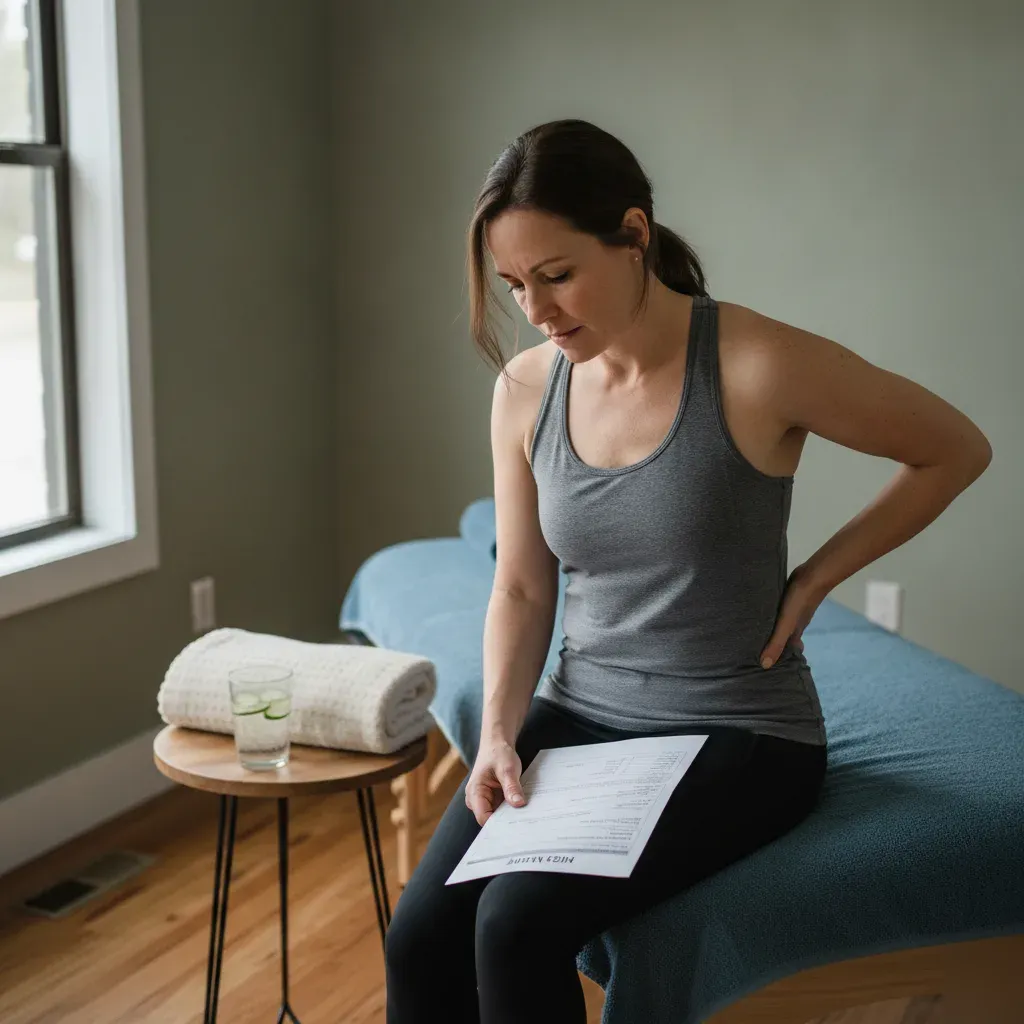
When Should You Avoid Getting a Massage? Key Contraindications in Prosper
What to skip, what to modify, and what to mention before you book.

Absolute vs. Relative Contraindications: Why the Difference Matters
Not every reason to skip a massage means "never." Some reasons mean "not today" or "not without checking with your doctor first." That's the difference between an absolute contraindication and a relative one. And knowing which one applies to you can save you from a wasted trip, or worse, a session that leaves you feeling awful.
An absolute contraindication means massage is off the table right now, full stop. No amount of pressure adjustment or draping changes fix this. A relative contraindication is different, it just means you and your therapist need to talk before booking, maybe adjust the plan, maybe get a quick note from your physician. We see this mix-up constantly at our Prosper location. A client thinks their mild ankle sprain means they can't get a massage at all, when really it just means we avoid that one area and focus everywhere else.
What Counts as Absolute
These are the situations where we'd tell you to reschedule, no exceptions:
- A fever or active infection
- A known blood clot or deep vein thrombosis
- Open wounds, unhealed surgical sites, or active skin infections
- Severe or uncontrolled heart conditions
- Recent fractures that haven't been cleared by a doctor
None of these are personal calls. They're safety lines that every trained massage therapist has to respect.
What Counts as Relative
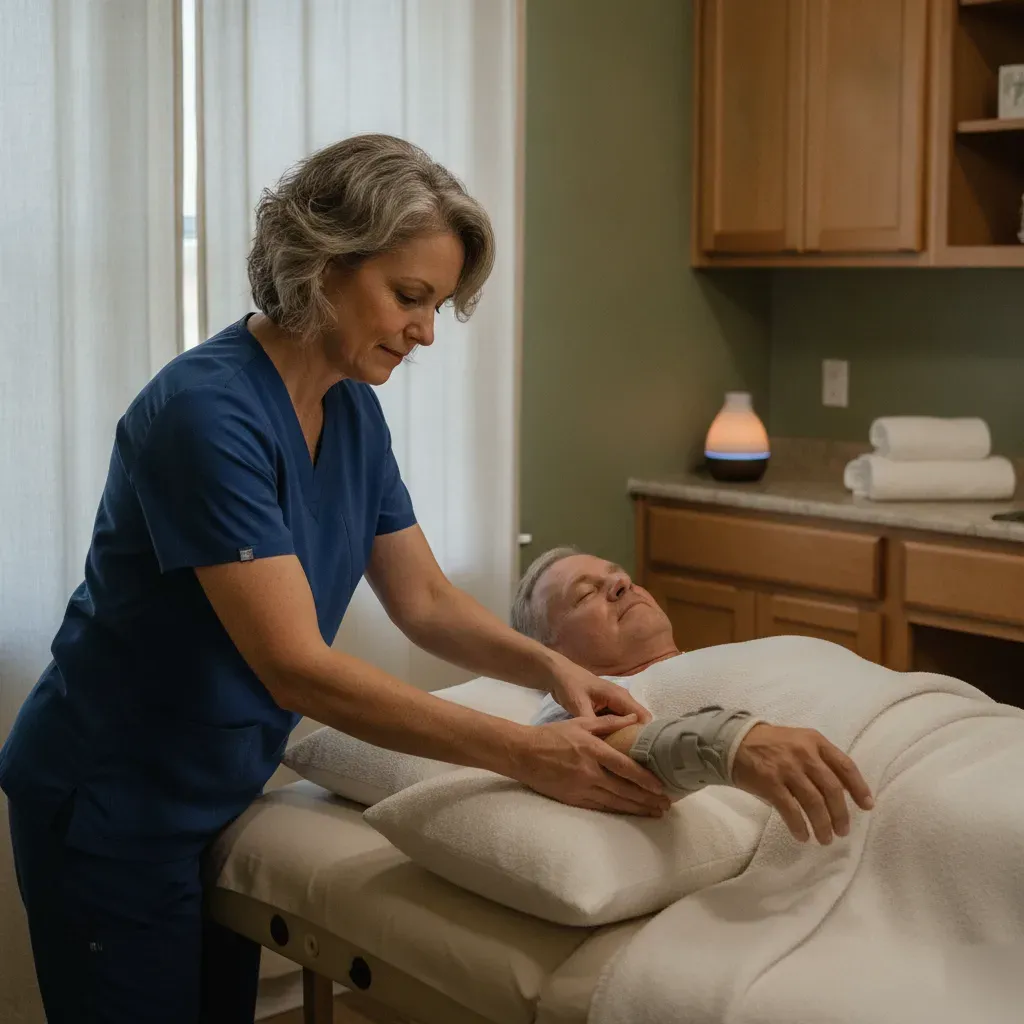
Relative contraindications are more common, and they're where most of the confusion happens. Think mild high blood pressure that's managed with medication. Varicose veins fall here too, we simply avoid direct pressure on them rather than skipping the whole massage. Chronic conditions like fibromyalgia or arthritis usually fall into this category as well, they just mean we adjust pressure and technique rather than saying no altogether.
Here's a scenario we run into a lot. A client came in with mild varicose veins in one leg and was fully convinced she couldn't get a massage at all. She'd been told by a friend that varicose veins were an automatic no. But that's not quite right, we worked around that one leg with lighter technique and focused the rest of the session as usual.
So why does this distinction matter so much? Because too many people either push through something they shouldn't, or they avoid massage entirely over something manageable. Neither outcome is good.
This is also where a real conversation with your therapist beats any online checklist. A quick intake conversation before your session lets us catch relative contraindications early, adjust the plan, and still give you a session that helps. This article is general information, not medical advice, so anything you're unsure about is worth running by your own provider first.
Health Conditions That Require a Modified Massage, Not a Cancellation
Here's something we wish more people knew: not every health condition means you have to skip your massage. A lot of clients call us thinking they need to cancel, when really they just need a different approach. We see this often in Prosper. Someone has mild high blood pressure or a healed injury from months ago, and they assume massage is off the table entirely. It's usually not.
Our team asks about your health history before every session, not to gatekeep, but to build a session that supports you. So instead of a flat no, you might get shorter session times, lighter pressure, or a different body position. And that's the whole point of a private suite setting. There's no rush, no cattle-call environment, just time to talk through what's going on with your body before the massage starts.
Conditions That Usually Just Need Adjustments
Some conditions call for a modified session rather than a full stop. A few common ones:
- Controlled high blood pressure — pressure and positioning get adjusted, but the massage can still move forward
- Mild osteoarthritis or joint stiffness — lighter touch near affected joints, with focus shifted to areas that feel good and safe
- Diabetes with stable blood sugar — extra caution around the feet and lower legs, since sensation can be reduced there
- Old injuries or surgical sites that are fully healed — pressure gets kept lighter directly over the area, everything else proceeds as normal
- Anxiety or sensory sensitivities — slower pacing, less talking, adjustable lighting and pressure so the session feels manageable
None of these are automatic disqualifiers. But they do need a heads-up beforehand, so your session can be shaped around what your body needs that day.
Think about a client managing type 2 diabetes who came in worried we'd turn her away. We didn't. We kept pressure lighter on her lower legs and checked in more during the session. She left relaxed, not worried. That's the difference between a blanket rule and actual care.
Pregnancy sits in its own category. It isn't an automatic no, but it is a conversation to have with your OB or midwife before you book rather than something to decide from an article. If you're pregnant, check with your provider first and let us know when you schedule, so we can go over it during intake and figure out whether a session makes sense for you right now.
The same goes for clients recovering from a recent skin treatment like dermaplaning or a HydraFacial. Once any redness or sensitivity has settled, massage can usually still happen, just with a lighter touch near the treated area.
What we won't do is guess. If you've got a condition you're not sure about, tell us before you book. That five-minute conversation is what turns a "maybe I should skip it" into a session that helps you feel better. If you're managing one of these and wondering whether a session makes sense, our Swedish massage page for Prosper clients walks through what a typical visit looks like, including how sessions get personalized.
Recent Injuries, Surgery, and Skin Procedures: Timing Your Massage
Let's say you rolled your ankle at a soccer game near Prosper's Frontier Park last weekend. Or maybe you had a small procedure done and you're wondering if a massage sounds relaxing right now. It might not be the right time yet. Timing matters more than most people think.
Fresh injuries need blood flow control, not more circulation. A massage pushes fluid and blood through the area. That's great for sore muscles. It's not great for a sprain that's still swollen or a bruise that's still purple. We tell clients to wait until swelling goes down and a doctor gives the okay before booking deeper work on that spot.
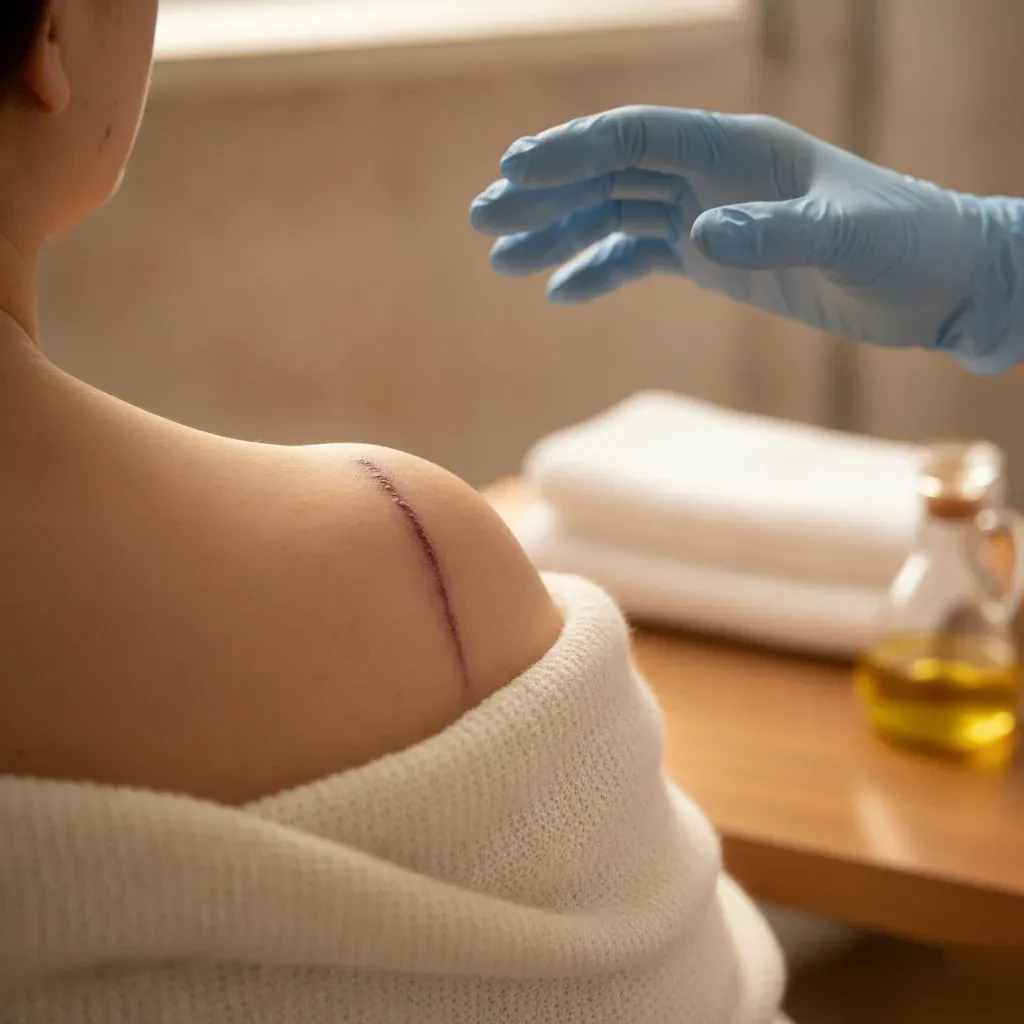
Surgery is its own conversation entirely. Any recent surgery, whether it's a joint replacement, a c-section, or even a minor outpatient procedure, needs clearance first. Tissue is still healing under the skin even when the outside looks fine. And massage pressure near an incision site can pull on stitches or irritate tissue that hasn't fully closed. So we always ask new clients about surgical history before we start.
Here's a general timing guide we walk clients through. These are general ranges, not promises, and your surgeon's instructions always take priority:
- Minor surgery (outpatient, small incision): many doctors clear light massage around two to four weeks out, but always confirm first
- Major surgery (joint replacement, abdominal): often six to eight weeks minimum, sometimes longer
- Fresh sprains or strains: wait until swelling and bruising fully resolve, usually one to three weeks
- Fractures: no massage over or near the healing bone until a doctor confirms it's fully healed
Every body heals differently, which is why clearance from the person managing your care matters more than a general range on a website.
Skin procedures come with their own waiting window too. If you just had Microneedling, Dermaplaning, or a HydraFacial, your skin barrier is more sensitive than usual. Adding heat, pressure, or hot stones on top of that can cause irritation you didn't sign up for. We usually recommend spacing services out by a few days at least. The same goes for RF Skin Tightening or Diamond Microdermabrasion, since these can leave skin slightly reactive for a short window afterward.
Sunburn falls into this category too, and we see it a lot in the summer months around Prosper and Frisco when clients spend the weekend outside. A hot stone massage on sunburned skin is uncomfortable at best. So if you're pink or peeling, let's wait it out.
One thing we've noticed: clients who ask questions before booking almost always have a better experience than those who don't. There's no shame in calling ahead and describing what's going on. Our team would rather adjust your session, or reschedule it, than push through something that isn't right for your body that week.
Frequently Asked Questions
Common questions about when to avoid or modify a massage.
Can I get a massage if I have a cold or the flu?
You should skip your massage if you have a fever, even a low one. Fever usually means your body is fighting an active infection, and massage is not appropriate while that is going on. A mild stuffy nose without a fever is often fine, but check with us first. We would rather reschedule you for a day when you feel better than send you home feeling worse.
Should I avoid massage entirely if I am pregnant?
Not necessarily, but pregnancy is one of the situations where you should talk to your own provider before booking. Ask your OB or midwife whether massage is appropriate for you and at what stage. Mention your pregnancy when you book so we can flag it during intake and discuss whether a session makes sense for you right now.
What should I tell my massage therapist before booking in Prosper if I have a health condition?
Tell us about any medications, recent surgeries, chronic pain, or conditions like diabetes or high blood pressure before your session. This short conversation lets us build a plan around your body instead of guessing once you are on the table. Many conditions just need a modified approach rather than a cancellation, and some need clearance from your doctor first.
Does Prosper's hot summer weather affect when I should get a massage?
Yes, hot weather can matter more than people expect. If you have spent hours outside in Prosper heat, you may be dehydrated or feel lightheaded. Drink water before your appointment and let your therapist know if you have been out in the sun. A short pause to cool down and rehydrate is often all it takes.
Can I still get a massage after a minor injury like a sprained ankle or muscle strain?
Often yes, as long as the injury is a few days old and not swollen or hot to the touch. Fresh sprains and strains usually just mean we avoid direct pressure on that one spot and work everywhere else as planned. If you are unsure how fresh is too fresh, mention it when you book so we can plan around it.
Ready to Get Started?
Call us at (469) 762-9411, or book online. We're a physician-supervised, boutique wellness studio at 1630 W. Prosper Trail, #110, Prosper, TX 75078.